
Development retrospective
Missions, bosses, and the road to 100 stages
Expanding a repeatable arena into a structured campaign with missions, minibosses, and milestone encounters.
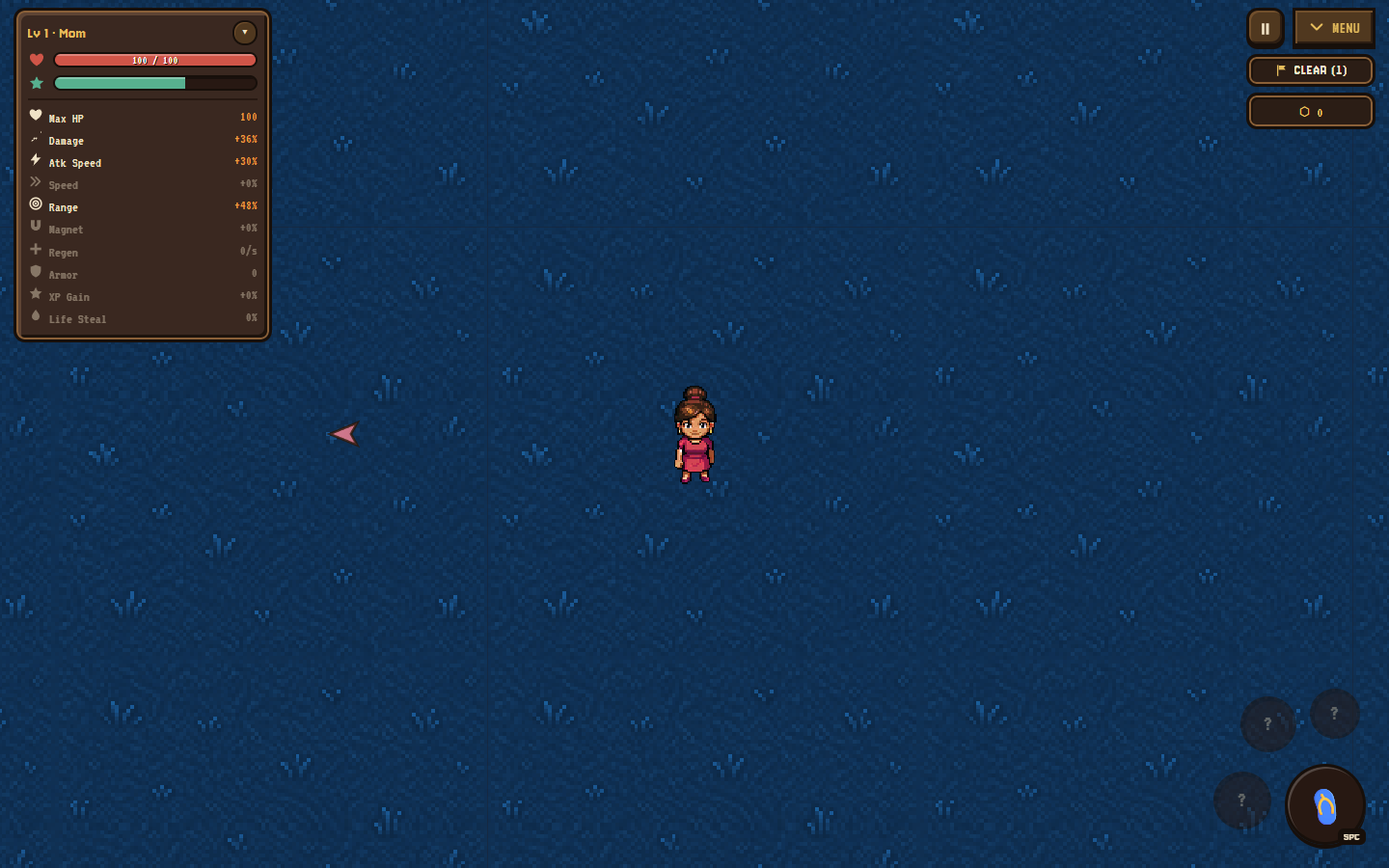
Giving the run a shape
Endless pressure can blur together, so stages became chapters with recognizable milestones. Early bosses at stages 15, 20, 25, and 30 gave players near-term targets and created natural places to introduce new mechanics.
Missions change movement
Special missions asked players to do more than maximize damage. Arena size, enemy density, timers, and objective placement had to work together. A mission that sounds simple on paper can become frustrating if its geometry fights the controls.
Planning the full climb
The boss roster eventually expanded through stage 100. That did not mean multiplying health by one hundred. Each band needed new threats, rewards, and pacing so the player could feel the run changing as their build changed.
Iteration over spectacle
The most useful boss work often happened after the first implementation: clearer telegraphs, better mobile placement, corrected overtime bars, and more honest shop restrictions. Readability is part of difficulty, not a layer added afterward.