
Development retrospective
Finding Chancla Fury's identity
The family cast, painted pixel-art direction, and upgrade vocabulary that turned a prototype into Chancla Fury.
A game needs a point of view
Once the basic loop worked, the project needed more than generic enemies and upgrades. The family cast, exaggerated household weapons, and chancla-flinging premise gave every later system a useful design filter: it should be readable, funny, and a little chaotic.
Building an art pipeline
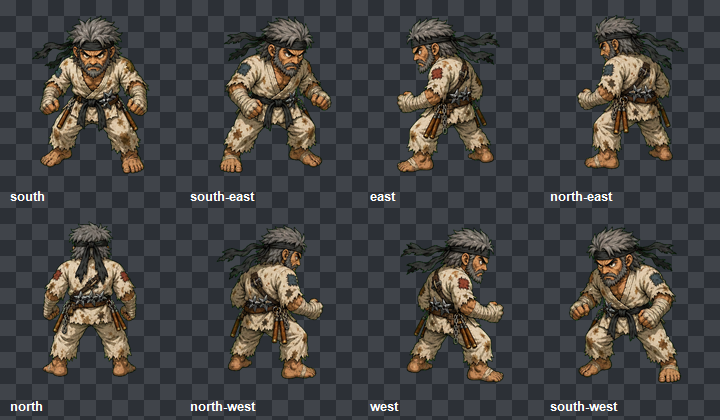
We tested several visual approaches before settling on a painted pixel-art presentation. Character animation, enemy silhouettes, room floors, and interface elements were developed together so the game would feel like one world rather than a collection of unrelated assets.
Progression players can read
Weapons gained level requirements, merge conditions, and related buffs. The challenge was not only balancing those rules; the interface had to explain what a player owned, what could evolve, and why an option was unavailable. That communication problem continues to guide our UI work.
What changed next
With a recognizable cast and visual direction in place, the project could expand. The following builds introduced accounts, permanent progression, stage structure, and the first serious approach to long-term balance.